
Ilip expands fresh food packaging with integrated tray absorption
Ilip’s Giovanni Donini said food packaging sustainability can’t be separated from performance, lighter trays or more recycled content only make sense if safety, preservation, and line reliability hold.
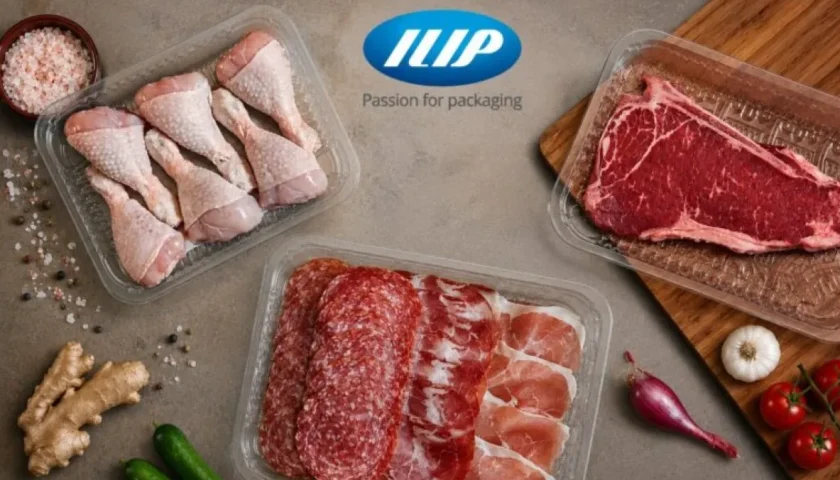
ITALY – Ilip, an ILPA Group company specialising in food packaging, is expanding its fresh food packaging portfolio with new tray formats for meat, fish, cheese, sliced products and fresh pasta, featuring integrated mechanical absorption in the tray bottom.
The company will showcase its tray bottom with integrated mechanical absorption at Cibus Tec 2026 from 27 to 30 October in Parma.
Ilip is presenting its HeatSealingMaster and StretchMaster ranges, alongside the SliceMaster line.
The Macrocell system is developed for applications requiring a high capacity for containing exudates and is available in MT230 and MT250 formats.
It complements Ilip’s Microcell technology, available in the Evo and Duo versions.
Both systems integrate mechanical absorption into the tray bottom, capturing and retaining exudates while eliminating the need for a conventional absorbent pad, reducing material count and simplifying recycling streams.
Material Options Span Mono-PET, Recycled Content and Bioplastics
The HeatSealingMaster range is available in three materials: Evo, made from monomaterial PET; Duo, made from PET and polyethylene; and Bio, made from compostable bioplastic certified to EN 13432 standards.
The StretchMaster range, developed for automatic packaging lines using stretch film or flow pack, incorporates a 195 by 144 millimetre format.
The Evo version is available in monomaterial PET with recycled content, as well as compostable bioplastic, and can incorporate the Microcell bottom.
The SliceMaster line provides heat-sealable trays featuring a recycled PET, ethylene vinyl alcohol and polyethylene barrier structure for packaging cold cuts and sliced products in modified atmosphere.
Leadership Frames Sustainability as Inseparable From Performance
Giovanni Donini, business manager for foodservice packaging and fresh food packaging at Ilip, said sustainability in food packaging could not be separated from performance.
He noted that reducing a tray’s weight or increasing its recycled material content only made sense if the product continued to deliver required levels of safety, preservation and reliability on packaging lines.
He added that the company worked to optimise materials and structures to use resources more efficiently without compromising packaging functionality.
Expanding Formats Address Diverse Fresh Food Requirements
The M230 8-Hamburger and half-Gastro formats further expand the range’s applications.
Ilip aims to integrate technical performance with sustainability through solutions engineered to protect food, ensure reliability on packaging lines and use resources more efficiently.
For fresh meat and fish producers, eliminating separate absorbent pads simplifies packing lines and reduces material costs while addressing contamination concerns associated with loose absorbent materials.
The company’s approach reflects broader trends in fresh food packaging, where integrated functions replace separate components and material choice increasingly balances recyclability, recycled content and compostability against performance requirements.
Subscribe to our email newsletters that provide busy executives like you with the latest news insights and trends from Africa and the World. SUBSCRIBE HERE


Be the first to leave a comment