
Bayer launches recyclable mono-PP Talcid blister in Germany
Bayer says the pack earned a 98.86% recyclable plastic content score, supporting recycling where infrastructure exists while preserving quality, safety, and user experience.
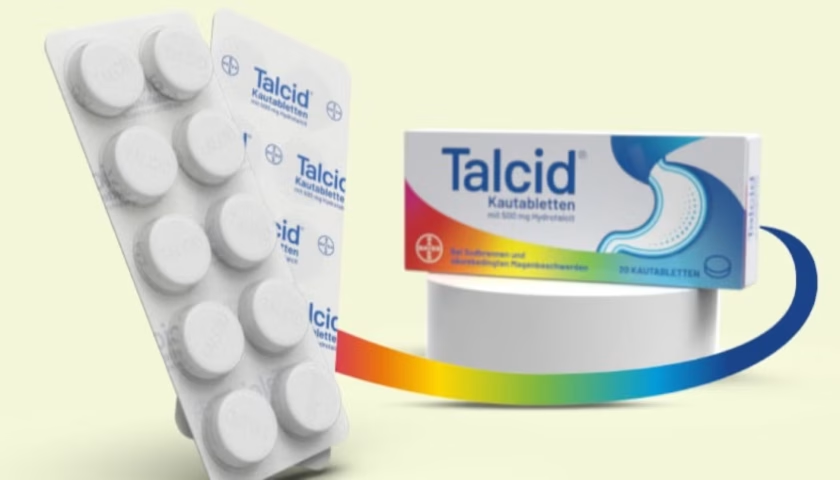
GERMANY – Bayer has introduced a polypropylene-only blister pack for Talcid in Germany, replacing a multi-layer structure with a single-material design that carries RecyClass Design for Recycling certification and a Recyclability Class A rating.
The Talcid pack is made entirely from polypropylene, creating a mono-material format that still meets product protection and quality standards for consumer health products.
According to Bayer, the pack received a recyclable plastic content score of 98.86 percent.
The format is intended to support recycling in countries where collection, sorting and recycling infrastructure is in place, while keeping product quality, safety and user experience unchanged.
Talcid is an antacid product used for heartburn and other acid-related symptoms.
German Launch Follows Slovenia Debut in Late 2025
Bayer first brought the format to Slovenia in late 2025 before extending it to Germany. The company plans to roll out the new blister format to 11 more European markets during 2026 and 2027.
This staged approach allows Bayer to test performance and recycling outcomes in markets with differing waste infrastructure before committing to broader distribution.
Pharmaceutical blister packaging has historically posed significant recycling challenges, since conventional formats combine PVC with aluminium foil, bonding incompatible materials that recyclers cannot separate economically.
Earlier PET Blister Paved Way for Polypropylene Design
The Talcid launch follows Bayer’s wider work on mono-material blister packaging.
In 2024, the company introduced a PVC-free polyethylene terephthalate single-material blister for Aleve in the Netherlands. Bayer said the Talcid polypropylene blister forms part of its wider Consumer Health packaging plans.
These initiatives reflect growing pressure on pharmaceutical manufacturers to address packaging waste, as extended producer responsibility schemes increasingly penalise hard-to-recycle formats and regulators scrutinise PVC use in medical and consumer health applications.
Leadership Frames Design as Practical and Scalable Innovation
Chris Padain, vice president at Bayer, said the promise of the mono-material polypropylene design was that it could improve compatibility with recycling processes where appropriate systems existed, while continuing to provide a strong consumer experience.
He noted that push-through performance supported intuitive use, while the mono-material structure simplified packaging design.
He described it as the kind of practical, scalable innovation capable of making a meaningful difference across the company’s portfolio.
For pharmaceutical packaging, maintaining child resistance, moisture barrier and dosage integrity while improving recyclability remains technically demanding, making certified mono-material formats commercially significant.
Subscribe to our email newsletters that provide busy executives like you with the latest news insights and trends from Africa and the World. SUBSCRIBE HERE

Be the first to leave a comment