

Reports, Research & Trends
-

Fibre-based food packaging to claim 42% market share by 2045 as barrier innovations reshape industry: UPM
The findings underscore the urgency of accelerating innovation and development globally as fibre-based packaging moves from an alternative to a mainstream packaging solution for food applications.
-
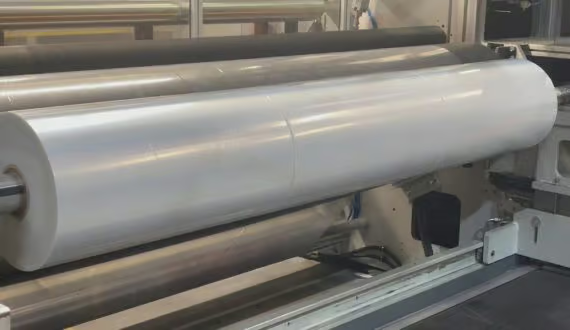
Alliance Report: 30% recycled film content possible from household plastic waste with advanced mechanical recycling
The study also found that chemical recycling will be complementary to advanced mechanical recycling, with each targeting different fractions of the flexible waste stream and different end-uses, particularly multi-material films for food-contact applications.
-

Cairo University’s 26.8% PVC bacterial degradation breakthrough for bioremediation, recycling
The Egyptian bacterial consortium provides a scalable biological pathway for tackling one of the most problematic plastics in the recycling stream, offering a nature-based alternative to energy-intensive chemical recycling processes.
-

Qatar produced over 3M tonnes of recycled materials from 51 recycling facilities – Ministry of Municipality’s 2025 Annual Report
These plants process a wide range of materials, including construction and demolition waste, plastics, metals, paper, tyres, and other recyclable products.
-

AWA reports 2.5% growth in global pressure-sensitive label market, Asia leads as in-mold label market expands
The updated AWAreness Report Global Influx examines the impact of Asian exports on European and North American pressure-sensitive label markets, covering pricing pressures on local producers, supply chain shifts, and investment in intelligent labels.
-

Komori India installed 59 offset presses in FY 2025-26, led by Lithrone GL437 for commercial, packaging applications
The north’s 33 installations out of 59 reflect the concentration of commercial printing in Delhi NCR, which has historically been India’s largest print market.
-

Glen Industries reports FY26 total income of US$24.6M as sustainable packaging demand drives growth
Chairman & Director Lalit Agrawal stated that the performance during H2 and FY26 reflects the strength of the product portfolio and the growing demand for sustainable packaging solutions across domestic and global markets.
-

Italy exceeds EU targets with 69.5% aluminium packaging recycling rate as beverage cans reach 92.8%
The 92.8% rate represents a 5.5% increase in %age points compared to the previous year, leading CIAL to describe Italy as “one of the most efficient countries in Europe” for aluminium recycling.
-

Ardagh Glass Packaging targets 20% EBITDA Growth over five years under Clearly Ardagh transformation programme
The planned capex increase to 9% of revenue signals that AGP is not merely cutting costs but investing in more efficient furnace technology, automated inspection systems, and lower-emission production methods.
-

FAO report warns of food safety risks in recycled plastics, citing Africa’s informal sector, fragmented collection systems
The FAO report does not argue against recycled packaging, it argues for the systems that make it safe.