

Regulatory & Policy
-

Saudi Arabia bans syringe-style cosmetic packaging from 2027 with new labelling rules for ampoules, vials
Manufacturers, importers, and other entities have until 31 December 2026 to withdraw affected products or modify them to meet the new requirements.
-

Tanzania doubles down on plastic packaging ban as government balances industrial growth with strict environmental enforcement
Industry and Trade Minister Judith Kapinga stressed that tackling plastic waste needs a surgical approach, as blanket shutdowns could harm local manufacturers, cut government revenue, and cause mass job losses.
-
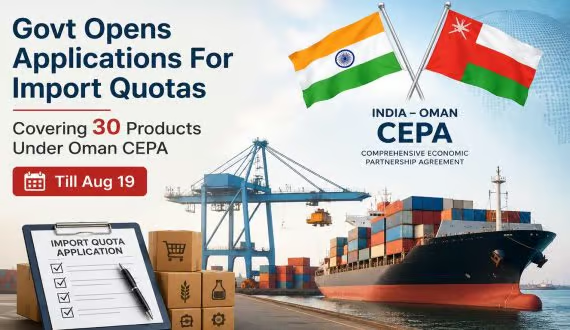
India opens duty-free and cut-rate import quotas for medical-grade polymers under Oman CEPA
The TRQ framework cuts or phases out tariffs on set import volumes, letting domestic manufacturers source key raw materials at lower or zero duty.
-

Go-Pak’s new 100% rPET Clarity Cups beat UK plastic tax, green RAM rating
The green RAM rating is a key UK market differentiator, as packaging producers must prove recyclability to lower EPR costs and dodge penalties.
-

Turkish packaging maker Barem Ambalaj files for court protection as US$228M plant expansion, macro headwinds squeeze cash flow
The protection-seeking decision comes as Turkish packaging makers struggle with high energy costs and a weak lira, which have raised raw material import prices and squeezed sector margins.
-

EU PPWR FAQ clarifies penalty procedures, existing stock rules and traceability ahead of 12 August deadline
The Commission clarifies that packaging produced and in stock but not placed on the market by 12 August 2026 does not need to be destroyed, remanufactured, or re-labeled.
-

Neveah’s triple ISO certification boosts Nigerian recycling, manufacturing operations
These certifications serve as official proof that the business meets international quality, safety, and efficiency standards, boosting credibility with customers, financial institutions, development partners, regulators, and other global stakeholders.
-

UK’s FPA urges evidence-based packaging reform as US$36B sector faces overlapping EPR, DRS, plastic tax compliance burdens
The association: future rules must be based on life cycle evidence and system impacts, not material assumptions.
-

July 2026: Mandates, Mergers and Millions Reshape MEA Packaging, The Month Sustainability Got Real
Across the Middle East and Africa, the packaging industry moved from ambition to action with a velocity that caught even seasoned observers off guard, policy…
-

Ghana Medical Association demands comprehensive ban on single-use food packaging plastics for public health
If paired with affordable sustainable alternatives and proper enforcement, the broader ban would improve waste collection, recycling, and public education, while cutting plastic pollution and creating cleaner cities.