

Zero Waste Foundation hosts Türkiye Plastic Vision 2053 workshop for regional recycling hub
Effective plastic recycling starts with source-separated collection, backed by sustainable finance, licensed operators, reduced informality, inspections, and public awareness.
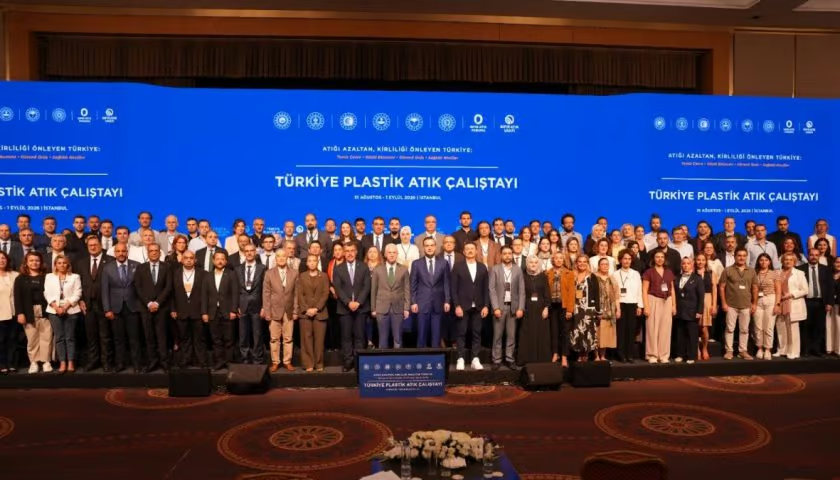
TÜRKIYE – Türkiye has held a two-day national workshop in Istanbul with 600 representatives from 17 ministries, developing recommendations for the 2053 Türkiye Plastic Vision, including a phased transition away from single-use plastics and stronger source-separated collection.
The workshop, held from 31 August to 1 September 2026 and organized by the Zero Waste Foundation under the “Zero Waste for the Future – Common Mind Platform,” assessed the country’s plastic cycle through 15 thematic working tables.
The recommendations are expected to contribute to Türkiye’s preparations for COP31, which the country will host from 9-20 November 2026.
Zero Waste Foundation President Samed Ağırbaş stated that Türkiye’s plastic waste challenge required a common approach that brings local experience together with national policies.
Source-Separated Collection and Secondary Raw Materials Drive Circular Transition
Istanbul Technical University Rector Hasan Mandal presented the outcomes of the tables, which called for greater use of secondary raw materials, expanded source-separated collection and advanced recycling technologies to reduce Türkiye’s reliance on imported primary materials.
Participants recommended clear eco-design criteria and compliance schedules, stronger data systems to verify environmental claims, and closer coordination between product design and recycling infrastructure.
Source-separated collection was identified as the foundation of effective plastic recycling, requiring sustainable financing, stronger licensed operators, reduced informality, effective inspections and greater public awareness.
Agricultural and food-related plastics were identified as another priority, with recommendations for separate collection and tracking, alongside stronger digital monitoring and analysis infrastructure.
The workshop also highlighted microplastics and nanoplastics, calling for common measurement and analysis methods and stronger laboratory and risk-assessment capacity.
Data Integration and Chemical Recycling Identified as Priorities
Participants called for financing mechanisms based on verified data and sector performance, coordinated incentives under a single road map and a multi-stakeholder transformation mechanism covering 2027-2031.
Plastic waste data should be collected under common standards, integrated across institutions and digitally tracked from source to final processing.
ITU faculty member Hasan Can Okutan noted that Türkiye has some bottlenecks in accessing raw materials, adding that the country is advanced in mechanical recycling but needs to develop chemical recycling technologies.
The final thematic table recommended a National Plastics Strategy and Action Plan, stronger industry transformation and investment capacity in 2027-2031, and the positioning of Türkiye as a regional circular plastics hub by 2053.
Börte Köse Mutlu, director of the Zero Waste Institute at ITU, stated that the discussions focused on building on Türkiye’s existing experience in waste management and plastic raw-material recycling to establish a regional model.
Subscribe to our email newsletters that provide busy executives like you with the latest news insights and trends from Africa and the World. SUBSCRIBE HERE
Be the first to leave a comment